GateKeeper
A VR puzzle-survival experience where environmental storytelling and “trials” reflect the player’s mental barriers — progress comes through persistence, not speed.
Gameplay
Primary gameplay capture showing puzzle flow, VR interaction, and pacing.
Trailer
A shorter, mood-forward cut highlighting tone, environment, and key moments.
Overview
GateKeeper is a puzzle-based, single-player VR experience set in a temperate rainforest. The player is challenged by “The Gatekeeper” through a series of trials — designed to externalize internal resistance and reward steady problem-solving.
My role
- 3D modelling + level/world building support
- Programming support + interaction implementation
- Level design contributions (puzzle spaces + flow)
- Iteration + playtesting fixes (feel, clarity, reliability)
Team
- Sahil Sran — Project Manager / Environmental Design
- Raymond Chan — Modelling / Programming Support
- Muhammad Junaid — Programming
- Harsh Boken — Modelling / Programming / Level Design
Core mechanics
- Teleport locomotion (comfort-first VR navigation)
- Grab / place interactions for puzzle solving
- Physical object handling (timing + intent)
- No GUI — information is learned through the environment
Secondary mechanics
- Single-user VR setup (Quest 2 focus)
- Controlled interaction spaces (comfort + safety)
- Environmental pacing to encourage observation
- Progression framed as “trials” rather than levels
Narrative intent
The world is designed to reflect mindset: obstacles represent mental resistance. The Gatekeeper acts as a curator of trials — pushing the player to stay calm, observe patterns, and persist through uncertainty.
Project goal
Create an atmospheric VR puzzle experience that feels slower and more reflective than typical VR titles — encouraging players to notice environment changes and connect progression to emotional tone.
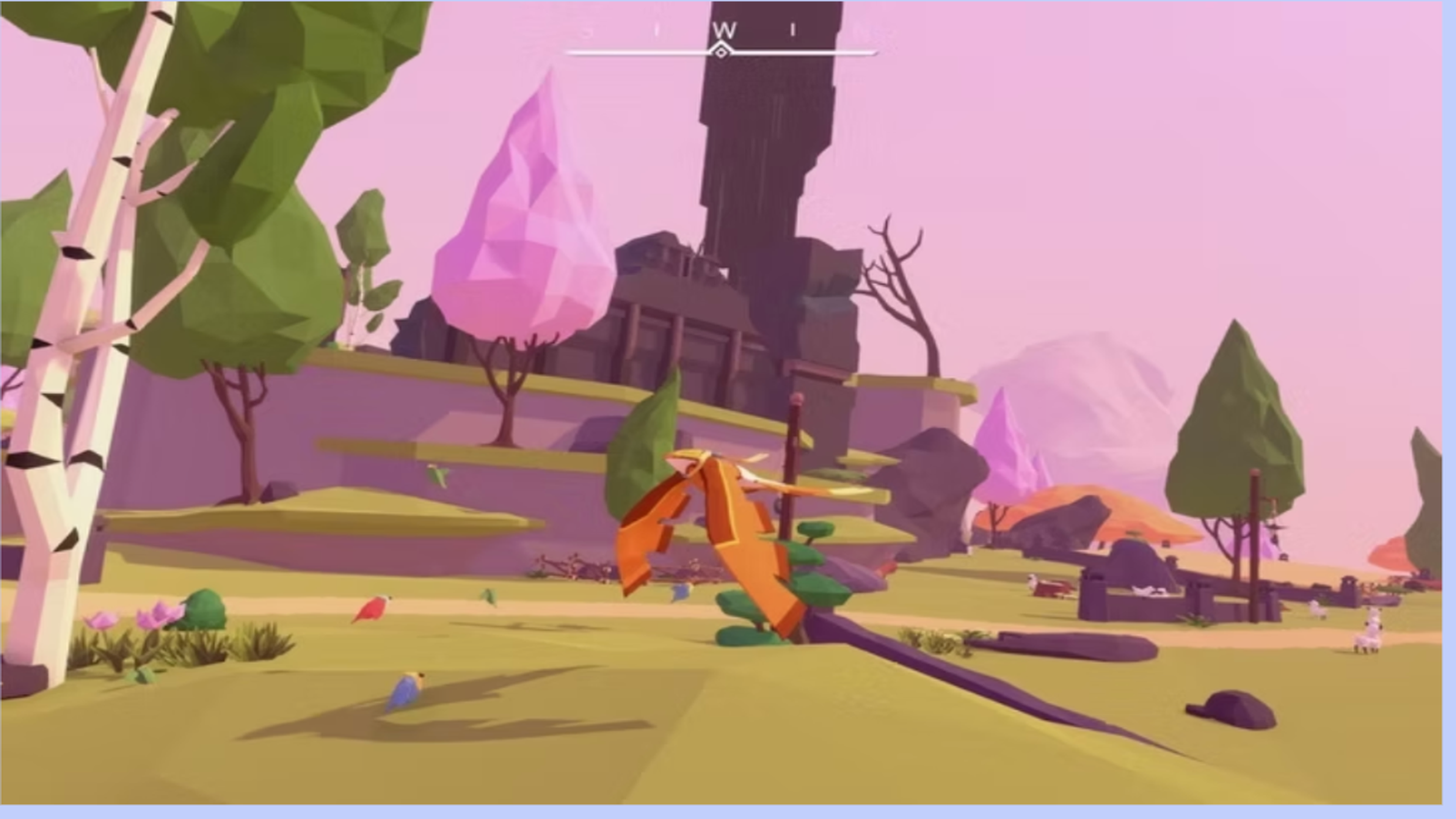
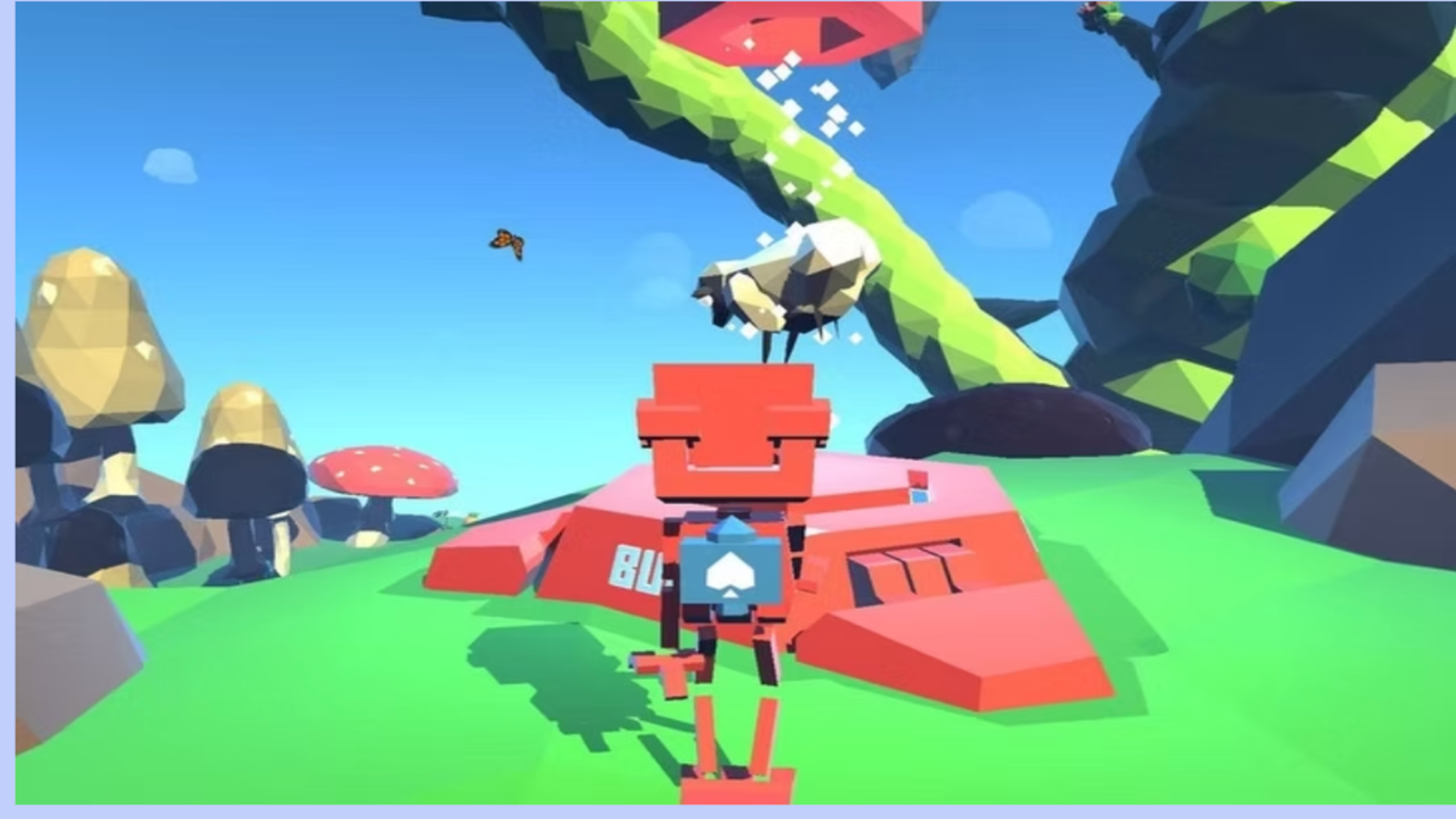
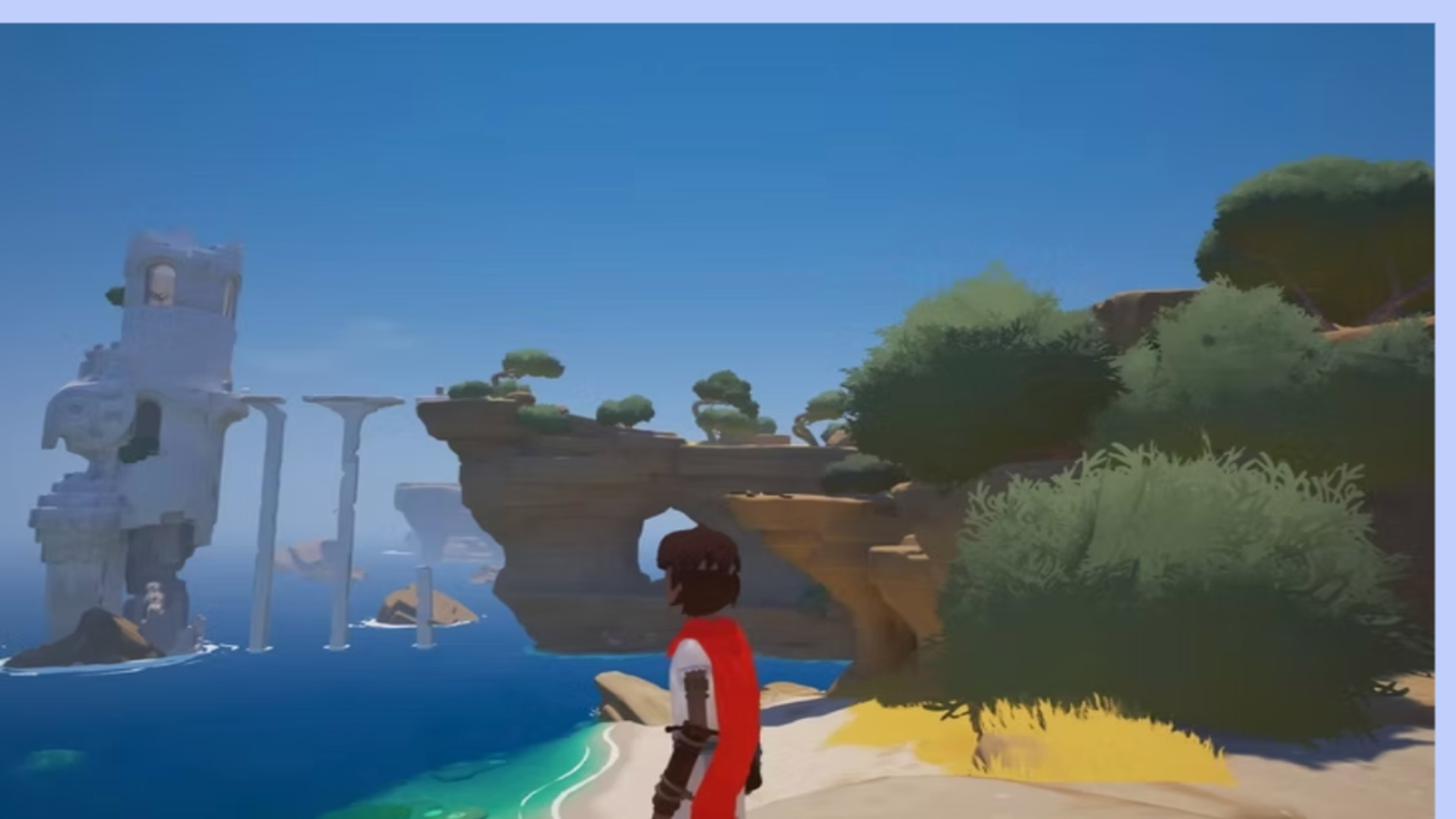
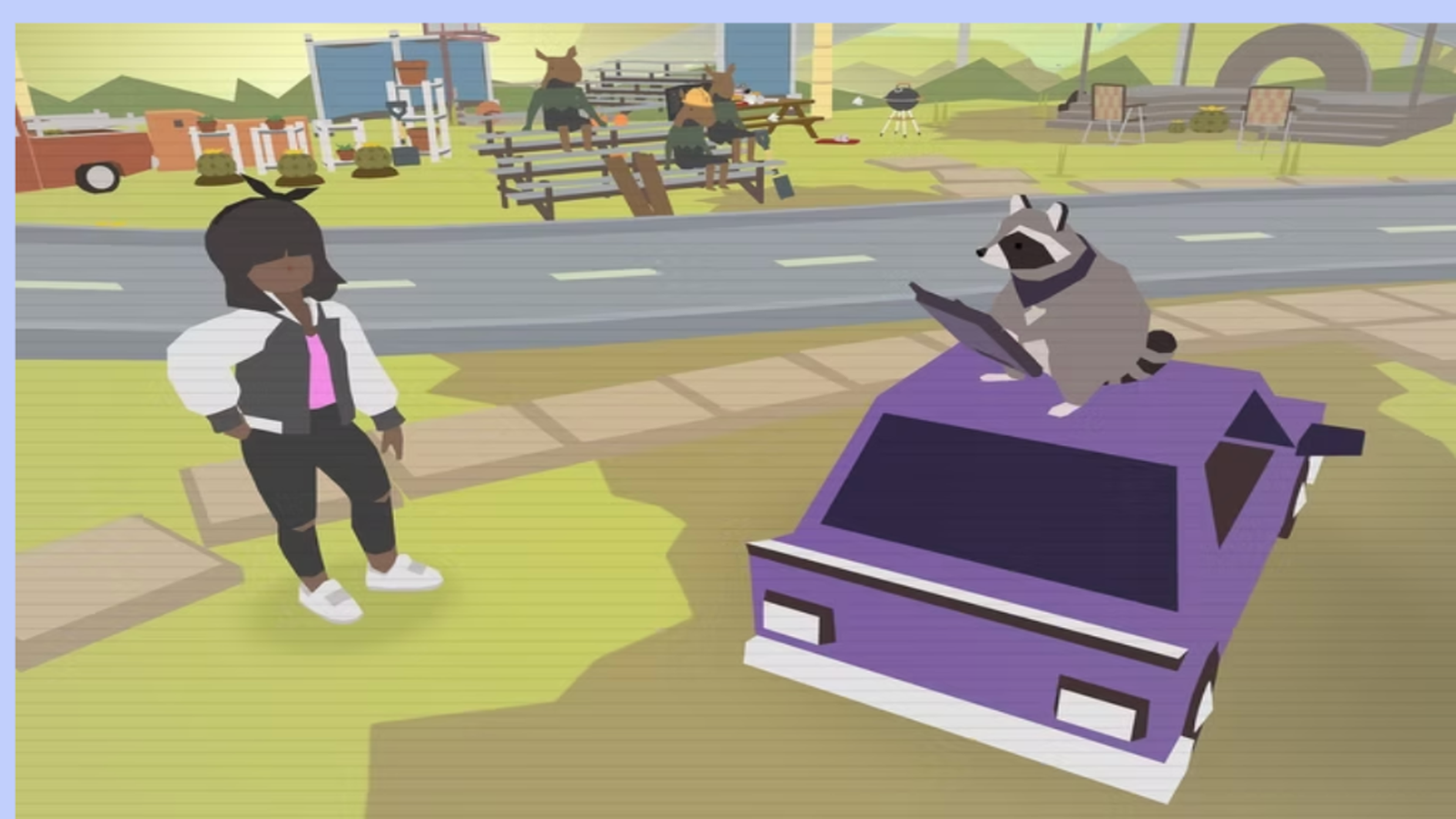
Inspired by stylized worlds that balance readability with mood — clear silhouettes, soft color palettes, and environment-driven storytelling.
Locomotion decision
- Explored free warp, translation walking, and controlled warp
- Selected teleport-first locomotion to minimize motion sickness
- Designed interaction zones to keep players oriented and safe
Rig / setup
- Quest 2 headset + two controllers
- XR interaction patterns: grab, trigger, teleport
- Constraints to prevent boundary breaking
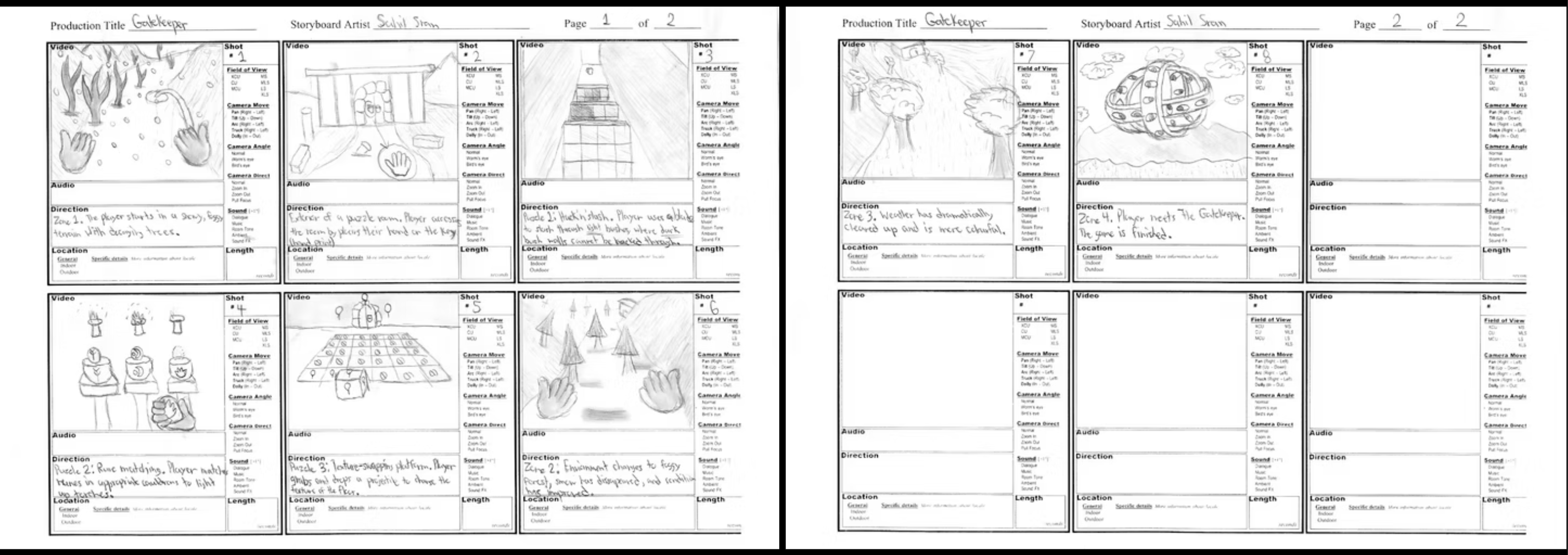
Storyboard
Early scene planning focused on pacing, reveal moments, and how the player’s attention is guided through the trial sequence.
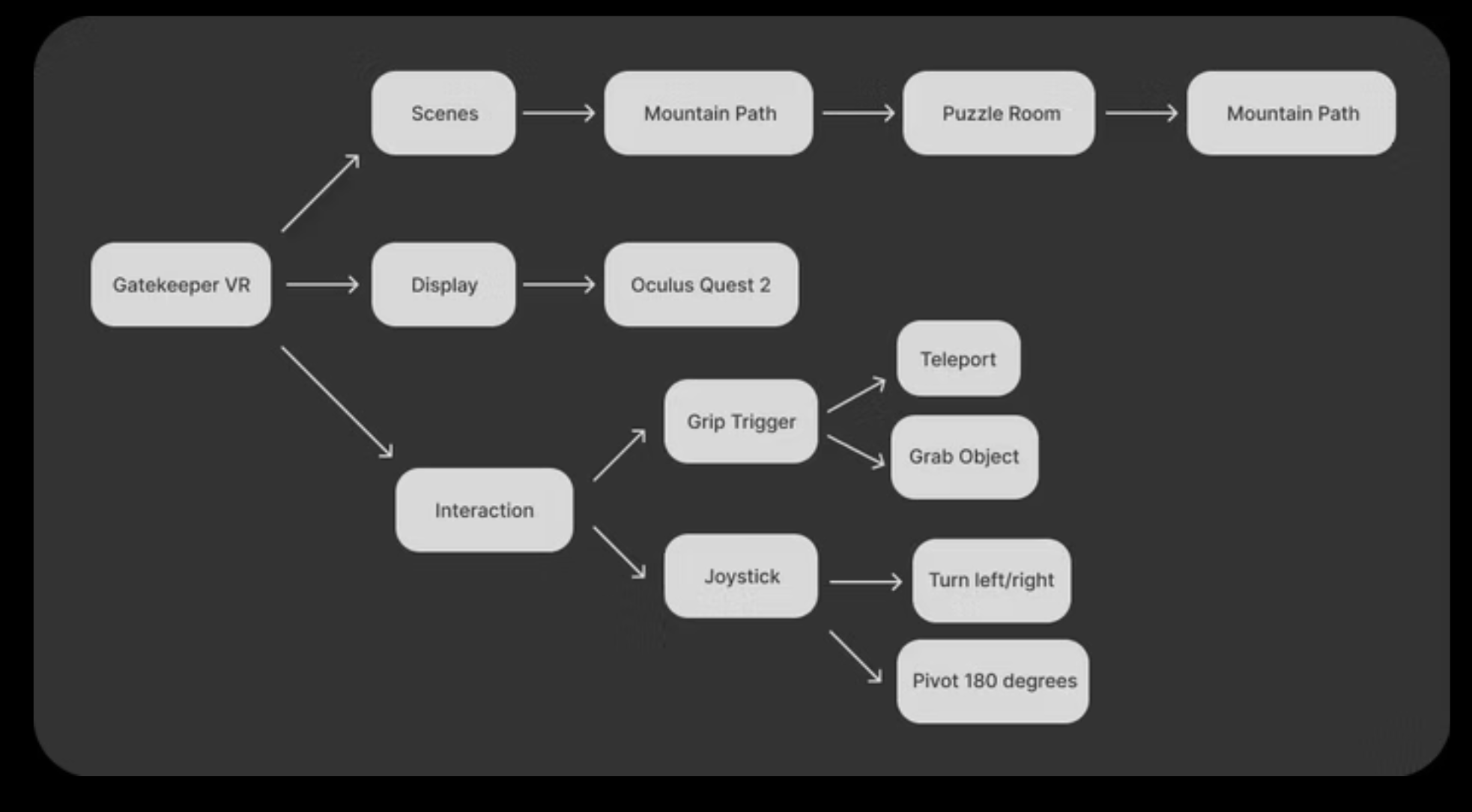
Architecture
A high-level interaction map showing the relationship between scenes, inputs, and VR actions (teleport / grab / joystick control).
Tools
- Unity (XR workflow)
- Oculus Quest 2 (target hardware)
- XR interactions (teleport + grab)
- 3D modelling pipeline (assets + environment)
What I learned
- Comfort-first VR design is a UX problem (not just a tech choice)
- Constraints create clarity (especially in interactions)
- Pacing + environment changes can carry story without UI